You’re not alone if you’ve ever wondered how old your cat actually is in human terms after looking at them. Cat owners ask this every day because it helps them understand behaviour, health needs, and what to expect at each stage of their cat’s life. Cats age very differently from humans, and the simple “1 cat year equals 7 human years” rule is not accurate at all.
This guide breaks down cat ageing in a way that is easy to follow. You will see exactly how old your cat is in human years, how their needs change over time, and the signs that show your cat is entering a new life stage.
Why Cat Years Are Different From Human Years
Cats mature fast in the beginning, then slow down as they get older. For this reason, a year of a cat’s life is not equivalent to a constant number of years of human life. Instead, the early years jump quickly, and the middle and senior years grow at a more predictable pace.
A one-year-old cat is roughly 15 human years old, and a two-year-old cat is about 24, which is why young cats often seem shockingly mature. Most cats age about four human years for every cat year after the age of two.
Cat Years To Human Years Chart
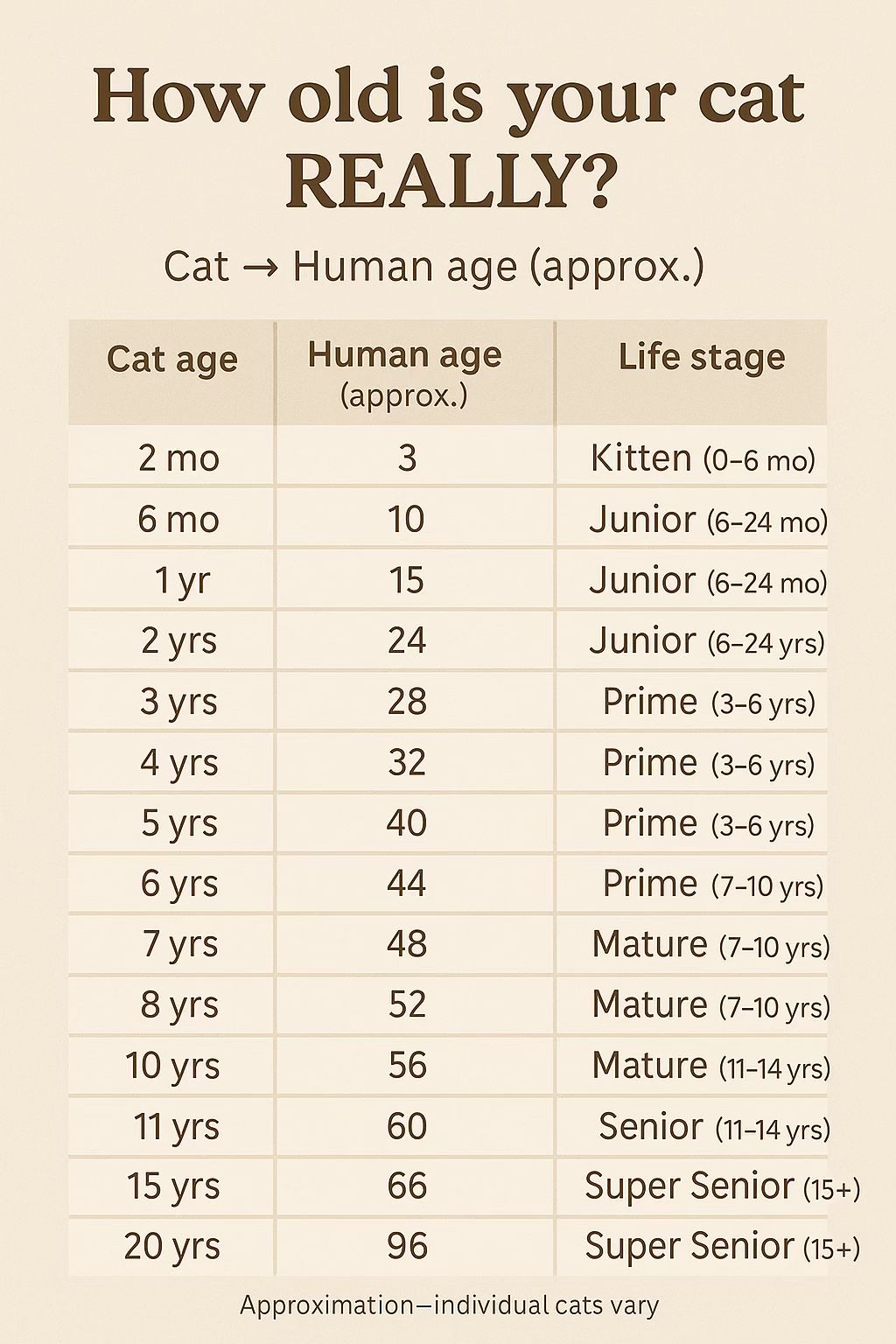
Cat Aging Stages
Below is the breakdown of how cats mature and what each stage means for health and behaviour. This is the information most owners want because it helps explain why a cat suddenly becomes calm, energetic, clingy, or picky.
For more detailed behavioural insights, you can also explore cat behaviour issues in our guide here: Cat Behavior Problems
Stage 1: Kitten (0 to 1 year)
What this stage looks like
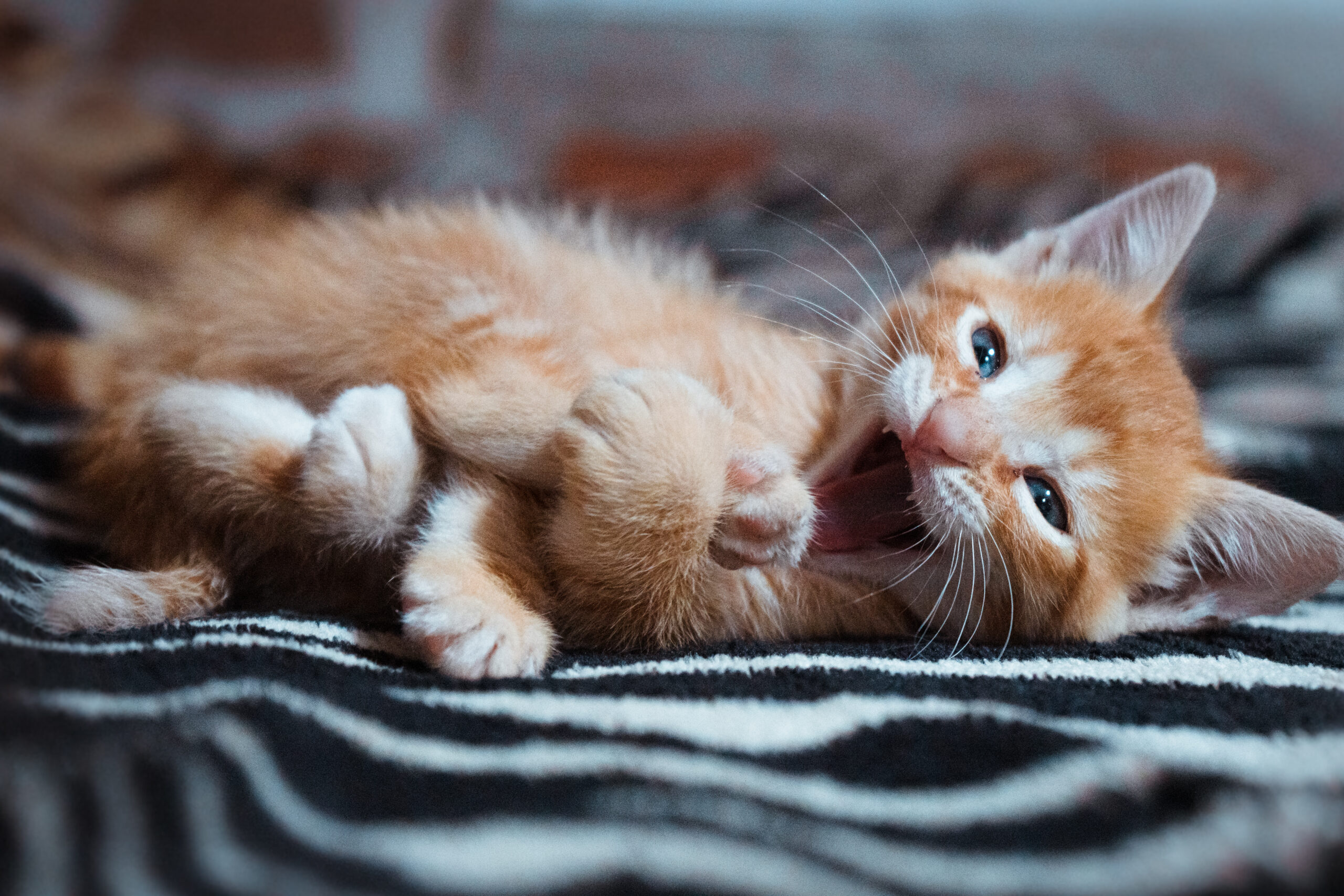
Kittens pack an entire childhood into the first twelve months. They learn how to play, hunt, socialize, and communicate. Everything is new, and they are absorbing behavior at lightning speed.
For new cat parents who want to build trust early, you can follow these beginner-friendly bonding steps: Building a Strong Bond With Your Cat – Tips for New Owners
What owners should focus on
Training with positive reinforcement
Socialization with people and pets
Proper nutrition for growth
Safe play and enrichment
This is the most important stage for shaping their personality.
Stage 2: Adult (2 to 10 years)
What this stage looks like
The adult years are your cat’s “prime time”. They know the home, they know their humans, and their routines are strong. Adult cats are confident and independent, but they still need stimulation and attention every day.
What owners should focus on
Annual vet exams
Weight management
Mental and physical enrichment
Watching for subtle behavioral changes
Adult cats sometimes mask discomfort. A cat hiding more than usual may need a checkup.
Stage 3: Senior (11+ years)
What this stage looks like
Senior cats slow down. They may sleep more, jump less, and seek quiet areas. This does not mean they stop enjoying life. Many senior cats become even more affectionate and people-focused.
What owners should focus on
Twice-yearly vet visits
Easier access to litter boxes and food
Pain management monitoring
Senior-friendly bedding and warm spaces
Cats live comfortably well into their teens and sometimes beyond 20 with proper care.
For dedicated care tips and comfort strategies, you can read our full guide here: Caring for Senior Cats: Special Considerations and Tips
Signs Your Cat Is Entering a New Life Stage
Cats rarely announce the moment they shift from one life stage to the next. They do not suddenly act like a teenager or a senior overnight, but they leave small clues that tell you their body and behavior are changing. Paying attention to these signs helps you understand what your cat needs and when it might be time to adjust their care.
1. Kitten to Adult
When a kitten moves into adulthood, the differences usually show up in their energy and habits. Play becomes less chaotic and more intentional, their daily routines start to feel predictable, and their weight settles into a healthy baseline. This stage is where their personality becomes clearer, and you start to see the cat they will be long-term.
2. Adult to Senior
The transition from adult to senior brings another set of changes. A senior cat may stop jumping to high places and choose lower, safer surfaces instead. They often sleep more than they used to, may show mild stiffness when getting up, and their grooming habits can slow down as joints and flexibility change. If any of these shifts happen quickly rather than gradually, it is best to check with your vet to make sure nothing else is going on.
Does Breed Affect Cat Ageing?
Breed does play a role in how cats age, although the differences are usually most noticeable in the senior years. Some breeds are known for longer lifespans, such as Siamese, Burmese, Ragdolls, and Russian Blues, which often stay healthy and active well into their late teens. Mixed-breed cats can also enjoy longer lives because their broader genetic mix tends to reduce the likelihood of certain inherited issues.
To understand which breeds best match different lifestyles and needs, you can explore our detailed guide here: How to Choose the Right Cat Breed for Your Lifestyle
Even so, breed is only part of the picture. A cat’s lifestyle has far more influence on how they ages. Indoor cats almost always live longer than outdoor cats because they avoid accidents, predators, harsh weather, and infectious diseases. Good nutrition, routine vet care, weight management, and a low-stress environment can add years to any cat’s life, no matter the breed.
Breed does play a role in how cats age, although the differences are usually most noticeable in the senior years. Some breeds are known for longer lifespans, such as Siamese, Burmese, Ragdolls, and Russian Blues, which often stay healthy and active well into their late teens. Mixed-breed cats can also enjoy longer lives because their broader genetic mix tends to reduce the likelihood of certain inherited issues.
How Long Do Cats Usually Live?
Most indoor cats live 12 to 18 years, and many reach 20+. The oldest recorded cat lived to 38.
Outdoor cats usually live shorter lives because of accidents, predators, and disease.
FAQ: Cat Years To Human Years
How old is a 1-year-old cat in human years?
A: About 15 years old.
How old is a 2-year-old cat in human years?
A: Around 24 human years.
At what age is a cat considered senior?
A: At 11 years and older.
Do indoor cats live longer?
A: Yes. Indoor cats live significantly longer because they avoid many dangers that outdoor cats face.
Can cats live to 20?
A: Absolutely. Many well-cared-for indoor cats reach 18 to 20, and some go beyond.
How can I help my cat live longer?
A: Keep them indoors, feed them a balanced diet, schedule regular vet care, manage dental health, and maintain a healthy weight.
Do big cats age differently?
A: Yes. For example, Maine Coons develop more slowly but age at a similar rate once adulthood hits.
Do male or female cats live longer?
A: Females often live slightly longer, but the difference is small compared to lifestyle and care.
Final Thoughts
Understanding cat years to human years gives you better insight into your cat’s needs, moods, and health. It helps you appreciate why your cat acts the way they do at each stage of life. Whether you have a wild little kitten or a wise senior curled beside you, each stage brings something special.
Download Pawrpose now
Make pet parenting more intelligent, empathetic, and impactful with Pawrpose, the AI App for Pets. Be part of the movement that is changing the way AI supports pet care in the future, making every moment matter, one paw at a time. Enhance your pet parent experience with Pawrpose, available now on Google Play Store and App Store