


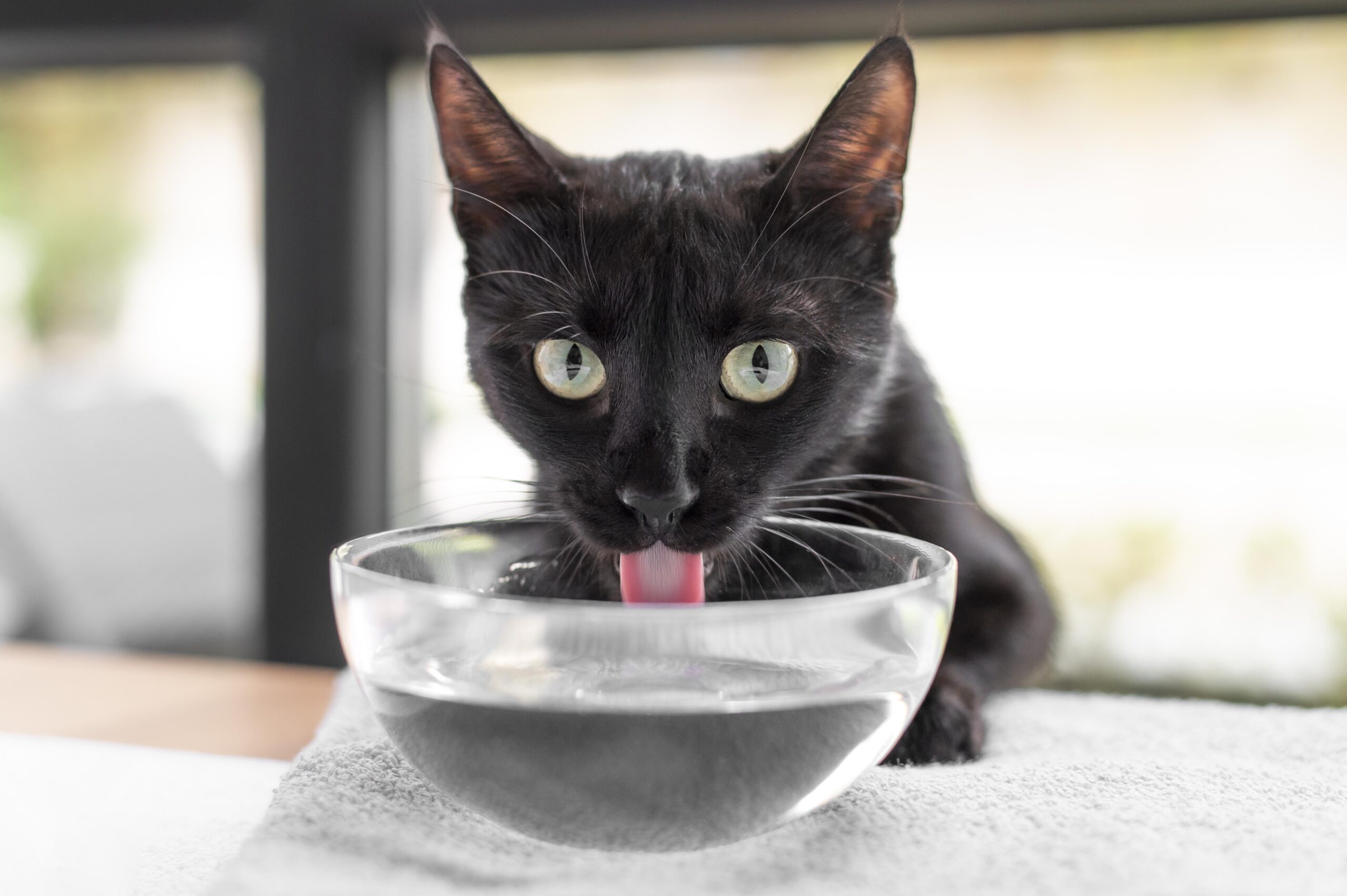
You might have thought, “Is that enough water?” if you’ve ever seen your cat take a few quick laps from a bowl and then walk away. Cats don’t naturally drink much water, which can make it difficult to tell if they are getting enough. It’s important to know how much water your cat needs for their health, especially since dehydration can cause serious problems over time.
This guide makes everything easy to understand, so you know what’s normal, what’s not, and how to keep your cat healthy.
Key Takeaways
- Cats need about 50 to 70 ml of water per kg of body weight every day, and this amount includes the water they get from their food.
- Wet food makes you drink less, but dry food makes you need more water.
- Because cats come from the desert, they naturally drink less.
- Your cat’s normal habits will determine how much water it needs.
- Signs of dehydration can be difficult to see, but they are serious.
- If you drink more than usual, it could mean you have health problems.
- Simple things like new water or fountains can help people drink more.
- The best way to stay hydrated is to change your diet.
- A cat’s age and health affect how much water it needs.
- Watching how people act is more important than measuring exact amounts.
- Changes in drinking habits that happen suddenly shouldn’t be ignored.
The Short Answer
A healthy cat should drink about this much:
50 to 70 millilitres of water for every kilogram of body weight every day
That means:
- A cat that weighs 4 kg (8.8 lb) needs about 200–280 ml of water every day.
- A cat that weighs 5 kg (11 lb) needs about 250–350 ml of water every day.
But here’s the most important thing: this number includes water from food, not just what they drink from a bowl.
Why Cats Naturally Drink Less
Cats came from animals that lived in the desert. Their ancestors lived in dry areas with little water, so they learned to get most of it from their prey.
This is why:
- Cats that eat wet food don’t drink much.
- If your cat eats dry kibble, they need to drink a lot more water.
Your cat does need water, though. Their instinct is to depend less on drinking and more on the moisture in food.
Wet Food vs Dry Food: A Big Difference
For wet food:
About 70–80% of wet cat food is water. If your cat eats mostly wet food, they might already be getting most of the water they need from their meals. For example: If a cat eats wet food, it might only drink a little or not at all.
For dry food:
There is only about 10% water in dry kibble, so cats that eat dry food need to drink a lot more. For example: A cat that eats dry food should drink water several times a day.
This is why veterinarians often recommend that people give their cats at least some wet food, especially if they are prone to urinary or kidney problems.
How to Tell If Your Cat Is Drinking Enough
A cat that is well-hydrated usually has steady energy, which means they stay active and alert all day without getting too tired. Their skin should feel smooth and stretchy, and it should snap back quickly when you lift it gently. Healthy cats also have gums that are moist, not dry or sticky, and they pee often. It’s normal for your cat to not drink much, especially if they eat wet food.
How to Tell If They’re Dehydrated
Cats are good at hiding when they’re in pain, so you might not notice dehydration right away. You might see that your cat is acting tired or not interested in doing things. Instead of being moist, their gums may feel dry or sticky, and their eyes may look a little sunken. A lack of appetite and skin that doesn’t stretch as much when you lift it gently are two other common signs. Another warning sign is urinating less often. If you see any of these changes, it’s best to call a vet right away.
Things That Affect How Much Water a Cat Needs
Not all cats need the same amount of water, and a number of things that happen every day can affect how much they need.
Diet: Cats that eat wet food get a lot of their water from it, but cats that eat dry food need to drink more.
Body Size: Because they have more body mass, bigger cats need more water.
Activity Level: Cats that are more active use more energy and lose more fluids, so they may need to drink more often.
Temperature and Environment: If it’s hot outside or the air inside is dry, you may need more water each day.
Health Conditions: Some diseases, like diabetes, kidney disease, or hyperthyroidism, can make you thirstier. If your cat suddenly starts drinking a lot more than usual, you should take them to the vet.
How to Get Your Cat to Drink More Water
A few simple changes can make a big difference if your cat isn’t drinking enough. Cats are naturally attracted to moving water, so using a fountain can make them drink more often. It’s also important to keep their water fresh because many cats won’t drink from bowls that have been sitting for too long.
Putting out more than one water bowl around your house is also a good idea so your cat can always get to it easily. The kind of bowl is also important. Some cats don’t like plastic, so switching to ceramic or stainless steel can make them more interested. Adding a little water to their food, whether it’s wet or dry, can also help them stay hydrated. Lastly, a lot of cats like to have their water bowl away from their food, so putting the two in different places can help them drink more.
Is it normal for a cat to drink very little water?
In some cases, yes, it’s completely normal. Cats that eat mostly wet food get much of their hydration from their meals, so they may rarely drink from a bowl. If your cat is active, eating well, and showing no signs of illness, low -visibility drinking is usually nothing to worry about.
However, if your cat eats mainly dry food and still drinks very little, that can be more concerning. In such situations, it is advisable to closely monitor their behaviour and hydration.
How Much Water Is Too Much?
It’s important to drink enough water, but drinking too much can also be a sign of a problem. If your cat suddenly starts drinking a lot of water, emptying the bowl, or urinating more than usual, it could be a sign that they are very thirsty, which is called polydipsia.
Health problems like diabetes, kidney disease, or thyroid problems can cause changes like this. If your cat starts drinking a lot more all of a sudden, you shouldn’t ignore it and should call the vet right away.
Daily Water Intake Example
Let’s make it simple with a real scenario.
A 4.5 kg cat:
- Needs about 225–315 ml per day
If eating wet food:
- May get 150–250 ml from food
- Only needs to drink a small amount
If eating dry food:
- Must drink most of that amount directly from water
This study explains why two cats of the same size can have very different drinking habits.
Keeping track of how much water your cat drinks
It’s not necessary to get an exact measurement of how much water your cat drinks, but noticing patterns can be very helpful. One easy way to keep track of this is to fill the bowl with a certain amount of water and see how much is left after 24 hours. Remember little things like spills or evaporation. This kind of rough tracking can help you notice changes early and find problems before they get worse.
Things to think about when caring for kittens and older cats
Kittens get most of their water from their food, especially if they eat wet food, but they should always have access to clean, fresh water. Older cats, on the other hand, are more likely to become dehydrated and have kidney problems, so it’s even more important for them to drink water as they get older. They usually do better on diets that are higher in moisture, and you should keep a closer eye on how much they drink to see if anything changes.
Final Thoughts
There isn’t a single answer to the question of how much water a cat should drink. A good rule of thumb is 50 to 70 ml per kilogram per day, but the bigger picture is what really matters.
Check out:
- What they eat
- How they act
- Changes that happen over time
It could be that a cat that seems fine but doesn’t drink much is perfectly healthy. If your cat suddenly drinks a lot, it could mean something is wrong.
If you’re not sure, pay attention to small changes. Cats are sneaky, but their behaviour tells you more than you might think.
Download Pawrpose Now
And if you want personalised feeding guidance tailored to your dog’s breed, weight, allergies, and lifestyle, download Pawrpose and try our Diet AI. It answers diet questions instantly and helps you build a plan that fits your pet’s needs. Pawrpose, the AI App for Pets, helps you understand your dog’s age in human years, health, and behaviour better with smart, empathetic guidance. Get tips, track your pet’s well-being, and make every moment with your furry friend safer and happier. Enhance your pet parenting experience today with Pawrpose.
Download Pawrpose, available on Google Play Store and App Store.